(Just bringing up an old post. I linked to it in the combox over at New Liturgical Movement a week or two ago, and it became my new most popular post, so I thought I'd resurrect it here.)
I told this story at dinner the other night. The family liked it, and Puff told me I should write it out on the blog. Like most of my best stories, it isn't my story at all, but my father's, and like many of his best stories, it's from the war.
Dad was at or near the front lines in Italy one day when an officer came down the line. "Any Catholics here," he began. "There's a priest about to say Mass in the next field." Dad took his helmet and rifle and headed over to the next field, as did several other Catholics.
He was appalled when he arrived. The field was wide open, easily visible from the German positions, and exposed to any kind of enemy fire. The men immediately looked for a hill, a shell hole, a rock, a furrow- anything that might give them any sort of cover. Meanwhile, in the middle of the field stood the priest, carefully setting up his Mass kit on a big rock, taking his time and doing it properly, appearing as if he had no concern in the world other than this, and going about it as if he were in a parish back home, and there was no war to trouble anyone or anything.
If there was ever a time for a Tridentine speed Mass, this could have been it. But, to Dad's horror, (and he knew, because he used to be an altar boy at a Cathedral) the priest said the Mass slowly and carefully, doing every movement as prescribed, omitting no prayer, while gunfire raged around them.
At last the priest turned, holding the consecrated host. "Come to Communion!" he shouted out to the men hiding in the field. "I grant you all full absolution. Come!"
Dad's reaction was: "He's got to be kidding." But then he saw it: the soldiers making their way forward to receive communion. Granted, they approached the priest at a dead run, and left at a dead run as soon as it was received. But still they came. Dad, emboldened by the other men, came forward himself, received, thanked God, and raced away.
He stayed in his furrow watching as the priest put away his Mass kit as properly as he set it out, and, when finished and having said his final prayers, the priest snapped his case shut and walked away.
That's the story. Not the best punch line, but the family liked it. I like it for it reminds of a good man I once knew and shall never see again in the flesh. It reminds me that there were other good men like him, once upon a time. Men who believed there were things to stand for, things to fight for, things that were worth risking your life for. And on that list of things worth risking your life over was Mass, and the chance for Communion.

Showing posts with label WWII. Show all posts
Showing posts with label WWII. Show all posts
20 September 2011


10 November 2009
A Week of Remembrance: "And the greatest of these..."
C.S. Lewis once wrote that courage is not merely a virtue, but rather it is every virtue at the testing point. All the men I have profiled in this little series have shown the courage to stand at the extreme testing point, and to make what difference they could. The last one, Andy Mynarski, stands out because, first of all, his actions really made no difference. He saved no one; he won no battle; he did not turn around any dire situation. Yet his actions move anyone who hears his story. I believe this is because of the second point: he displayed more than mere courage, but also the master virtue, which I can only refer to as love. Andy's story is really the story of two men.
Andy served as the gunner in the top turret of a Lancaster. Pat Brophy, his best friend, served as the gunner in the tail turret. The men served together on missions, drank together at the pub, and behaved like young men do, even having their own little in-jokes. Whenever they split up to return to their quarters, Brophy would call out to Mynarski and say "Good-night, Irish," to which Mynarski would respond with a salute and the words: "Good-night, sir."
On the night of June 12-13, 1944, Andy and Pat's bomber was taking part in a raid, when it was attacked by a German night fighter over Cambrai. Cannon shells raked the engines and fuselage, causing a hydraulic fire. The burning plane was a loss, and the pilot ordered the crew to bail out. Brophy went to exit his turret when he discovered the loss of hydraulics had jambed it closed. He was trapped.
Brophy stared through the back of his turret into the aircraft when he saw Mynarski leave the top turret and head for the rear escape hatch. Mynarski was about to jump when he spotted Brophy. Without hesitation Mynarski walked through the flames and began to try and free his friend.
He used a fire axe to try and pry then beat the doors open. When that failed he tossed the axe aside and began to try and pry the turret open with his bare hands. Meanwhile Brophy was shouting pointlessly at Mynarski to get out and save himself. Brophy watched in horror as Mynarski's clothes and parachute smoked and caught fire. Mynarski didn't seem to notice or care. The smell of burning flesh reached Brophy in the turret, sickening him. He redoubled his efforts to get Mynarski to leave and save himself.
How long Mynarski tried to save Brophy is unknown. Time seemed to stop before his desperate heroism. Finally the futility came to Mynarski. He left Brophy in the turret and made his way back through the fire to the hatch. Here he paused one last time, looked back to Brophy and saluted. Brophy could see his lips move as Mynarski said "Good-night, sir." Brophy responded: "Good-night, Irish." Mynarski leapt from the plane. His clothes and parachute burning he fell like a comet, landing hard. French peasants who saw his fall rushed him to a German military hospital, where he died of his burns not long after.
How then, is this story known? It is known, because miraculously Brophy survived.
After Mynarski bailed out, Brophy settled into his turret and waited for death. It was a long wait. Though the pilot and all the other crew had long since abandoned the plane, It didn't roll over and go nose down to the ground. Instead, the plane still flew level, taking only a gradual descent, as though some hand still guided the plane. After long minutes the plane skidded into the ground. The shock of the plane striking the ground did what Andy's efforts could not: it jerked the turret around, and threw Brophy free and clear. So gentle was the plane's landing that only two of its bombs exploded. Brophy landed somewhere soft and safe, relatively unharmed. The only thing he noticed was when he took off his helmet and all his hair came off with it.
The French found Brophy and hid him. Eventually Brophy made his way back to England, where he began to tell anyone and everyone the story of Andy Mynarski. He told his story to the officials his squadron and up the chain in Bomber Command. Because of his story, Andy Mynarski was awarded the Victoria Cross. His is one of the few Crosses handed out on the basis of the testimony of a single witness. But hidden behind Andy's courage is also the courage of Brophy, who was willing to forgo a chance of escape to get his friend off the aircraft and to safety. They were both brave, brave men.
Behind these two men I see other men standing. Anyone who knows the history of the bombing campaign of WWII knows it was costly. Many machines were shot down, many crews went down with their planes. On how many were there men who gave up their chance at life and safety to try and pull a trapped buddy out of the plane? They went down with their planes, their names and deeds known to God alone. Of them all, we know the story of just one: Andy Mynarski, and he stands for them all.
Andy served as the gunner in the top turret of a Lancaster. Pat Brophy, his best friend, served as the gunner in the tail turret. The men served together on missions, drank together at the pub, and behaved like young men do, even having their own little in-jokes. Whenever they split up to return to their quarters, Brophy would call out to Mynarski and say "Good-night, Irish," to which Mynarski would respond with a salute and the words: "Good-night, sir."
On the night of June 12-13, 1944, Andy and Pat's bomber was taking part in a raid, when it was attacked by a German night fighter over Cambrai. Cannon shells raked the engines and fuselage, causing a hydraulic fire. The burning plane was a loss, and the pilot ordered the crew to bail out. Brophy went to exit his turret when he discovered the loss of hydraulics had jambed it closed. He was trapped.
Brophy stared through the back of his turret into the aircraft when he saw Mynarski leave the top turret and head for the rear escape hatch. Mynarski was about to jump when he spotted Brophy. Without hesitation Mynarski walked through the flames and began to try and free his friend.
He used a fire axe to try and pry then beat the doors open. When that failed he tossed the axe aside and began to try and pry the turret open with his bare hands. Meanwhile Brophy was shouting pointlessly at Mynarski to get out and save himself. Brophy watched in horror as Mynarski's clothes and parachute smoked and caught fire. Mynarski didn't seem to notice or care. The smell of burning flesh reached Brophy in the turret, sickening him. He redoubled his efforts to get Mynarski to leave and save himself.
How long Mynarski tried to save Brophy is unknown. Time seemed to stop before his desperate heroism. Finally the futility came to Mynarski. He left Brophy in the turret and made his way back through the fire to the hatch. Here he paused one last time, looked back to Brophy and saluted. Brophy could see his lips move as Mynarski said "Good-night, sir." Brophy responded: "Good-night, Irish." Mynarski leapt from the plane. His clothes and parachute burning he fell like a comet, landing hard. French peasants who saw his fall rushed him to a German military hospital, where he died of his burns not long after.
How then, is this story known? It is known, because miraculously Brophy survived.
After Mynarski bailed out, Brophy settled into his turret and waited for death. It was a long wait. Though the pilot and all the other crew had long since abandoned the plane, It didn't roll over and go nose down to the ground. Instead, the plane still flew level, taking only a gradual descent, as though some hand still guided the plane. After long minutes the plane skidded into the ground. The shock of the plane striking the ground did what Andy's efforts could not: it jerked the turret around, and threw Brophy free and clear. So gentle was the plane's landing that only two of its bombs exploded. Brophy landed somewhere soft and safe, relatively unharmed. The only thing he noticed was when he took off his helmet and all his hair came off with it.
The French found Brophy and hid him. Eventually Brophy made his way back to England, where he began to tell anyone and everyone the story of Andy Mynarski. He told his story to the officials his squadron and up the chain in Bomber Command. Because of his story, Andy Mynarski was awarded the Victoria Cross. His is one of the few Crosses handed out on the basis of the testimony of a single witness. But hidden behind Andy's courage is also the courage of Brophy, who was willing to forgo a chance of escape to get his friend off the aircraft and to safety. They were both brave, brave men.
Behind these two men I see other men standing. Anyone who knows the history of the bombing campaign of WWII knows it was costly. Many machines were shot down, many crews went down with their planes. On how many were there men who gave up their chance at life and safety to try and pull a trapped buddy out of the plane? They went down with their planes, their names and deeds known to God alone. Of them all, we know the story of just one: Andy Mynarski, and he stands for them all.
9 November 2009
A Week of Remembrance: Courage to the End
Courage takes many forms in war. There is the courage of defense, the courage of attack, the kind of courage that saves situations and wins battles. There is the courage in risking one's life to save one's fellows, which is the greatest of all. There is also an kind of courage which may be called an existential courage, that of a man put into an impossible situation by indifferent or incompetent commanders, trying to meet his unjust doom with what dignity his grace affords him. Unfortunately, this kind of courage was and is all too common. In late 1941, this was the courage demanded of two battalions of Canadians sent to Hong Kong.
Originally, the planners and tacticians of war believed Hong Kong to be indefensible. If war with Japan commenced, they would maintain it as an outpost for as long as possible, but no plans were made for its defense. That policy was maintained until late 1941, when it was thought a small defense force would deter the Japanese from invading. Accordingly, Canada was asked to provide a battalion or two for the defense of the colony. The Royal Rifles of Canada and the Winnipeg Grenadiers were sent to Hong Kong on October 27. Neither had received front line training. As both were being sent for garrison duty, it was felt it wasn't important to train them for actual combat. The full depth of the error was realized just weeks later, when the Japanese launched near simultaneous attacks across the Pacific.
Despite the optimism, the defenders of Hong Kong, who numbered about 14,000 including the Canadians, had prepared several defensive lines for the coming attack. They unfortunately had almost no naval support and only five airplanes. The defenses were considered to be adequate unless the Japanese mounted a major attack.
On December 7, the post was put on high alert. On Dec 7th, the first Japanese air attack reached the island, attacking the airport and destroying all five aircraft. On the 9th Japanese ground forces began attacking the Hong Kong mainland positions. The defensive lines began to fall, and the over the next few days the defenders began a withdrawal to the island. On December 17th the Japanese demanded the outpost surrender. It was rejected. The Japanese began to soften up the island through artillery bombardment and air raids. On December 17th the demand for surrender was repeated. Again it was rejected, but defeat was only a matter of time. The US fleet lay in ruins in Pearl Harbour. British battleships Prince of Wales and Repulse were sunk off Malaya. The island was surrounded. There would be no supplies, no reinforcements, no relief. Outnumbered, out gunned, out prepared, the men prepared to go down fighting.
The invasion of the island began on the night of the 18th. experienced Japanese troops made progress up the island, the defenders holding on to every inch as best they could. Much of what was done over the next week was lost. Whole companies defending key points, or sent out to re-take critical objectives simply vanished from the earth, their deeds never known. Slowly and inexorably, the Japanese were taking over.
In the midst of all this, the actions of one man stand out, simply because his actions are remembered, and give us some small insight into the fighting at Hong King. Sgt John Robert Osborn and his company had been sent out on the morning of 19th December, 1941 to capture Mount Butler. At point of bayonet, his company succeeded in driving off the superior Japanese forces. They held the mount under heavy gunfire for the next three hours. The position became untenable, and the company began a withdrawal. Osborn and a small group covered the withdrawal. When it came to their turn to withdraw, Osborn singlehandedly engaged the enemy while his group pull back and rejoined the company. Finally he withdrew under heavy fire, gathered what stragglers he could, and rejoined the company position. He encouraged the man, and kept them fighting.
By afternoon the company was cut off from the battalion and completely surrounded. The men sought the protection of a slight depression in the ground. The Japanese came close enough to start lobbing grenades at the Canadians. Osborn started catching them and throwing them back. The company officer believed the position was impossible, and decided to surrender. He stepped forward from the depression, holding his white handkerchief aloft, and holding his pistol butt outward as a sign of surrender. The Japanese shot him dead. They threw more grenades. Osborn caught and threw more back, until he missed one. Shouting a warning to the men, Osborne threw himself on the grenade.
Minutes after Osborn's death the Japanese overran the company's position, and took the men prisoner. The defence of the island continued for another week. At 3:15, Christmas Day, the defenders surrendered, and the battle of Hong Kong was over. Before the survivors lay four hard, nightmarish years in Japanese Prison camps. Many of them would not survive.
After the war, when the POW's were released, the men of Hong Kong could finally tell their stories. People began to hear the story of John Robert Osborn. Reports were written, recommendations were made, and Osborn was awarded the Victoria Cross for his actions on the 19th December, 1941. It was the only VC awarded for the battle of Hong Kong.
In Hong Kong Park a bronze statue of a Canadian soldier stands as a memorial to the Battle of Hong Kong. He fiercely holds his rifle with bayonet afixed as he stands forever ready, forever defiant. It is John Osborn, the hero of Hong Kong.
Originally, the planners and tacticians of war believed Hong Kong to be indefensible. If war with Japan commenced, they would maintain it as an outpost for as long as possible, but no plans were made for its defense. That policy was maintained until late 1941, when it was thought a small defense force would deter the Japanese from invading. Accordingly, Canada was asked to provide a battalion or two for the defense of the colony. The Royal Rifles of Canada and the Winnipeg Grenadiers were sent to Hong Kong on October 27. Neither had received front line training. As both were being sent for garrison duty, it was felt it wasn't important to train them for actual combat. The full depth of the error was realized just weeks later, when the Japanese launched near simultaneous attacks across the Pacific.
Despite the optimism, the defenders of Hong Kong, who numbered about 14,000 including the Canadians, had prepared several defensive lines for the coming attack. They unfortunately had almost no naval support and only five airplanes. The defenses were considered to be adequate unless the Japanese mounted a major attack.
On December 7, the post was put on high alert. On Dec 7th, the first Japanese air attack reached the island, attacking the airport and destroying all five aircraft. On the 9th Japanese ground forces began attacking the Hong Kong mainland positions. The defensive lines began to fall, and the over the next few days the defenders began a withdrawal to the island. On December 17th the Japanese demanded the outpost surrender. It was rejected. The Japanese began to soften up the island through artillery bombardment and air raids. On December 17th the demand for surrender was repeated. Again it was rejected, but defeat was only a matter of time. The US fleet lay in ruins in Pearl Harbour. British battleships Prince of Wales and Repulse were sunk off Malaya. The island was surrounded. There would be no supplies, no reinforcements, no relief. Outnumbered, out gunned, out prepared, the men prepared to go down fighting.
The invasion of the island began on the night of the 18th. experienced Japanese troops made progress up the island, the defenders holding on to every inch as best they could. Much of what was done over the next week was lost. Whole companies defending key points, or sent out to re-take critical objectives simply vanished from the earth, their deeds never known. Slowly and inexorably, the Japanese were taking over.
In the midst of all this, the actions of one man stand out, simply because his actions are remembered, and give us some small insight into the fighting at Hong King. Sgt John Robert Osborn and his company had been sent out on the morning of 19th December, 1941 to capture Mount Butler. At point of bayonet, his company succeeded in driving off the superior Japanese forces. They held the mount under heavy gunfire for the next three hours. The position became untenable, and the company began a withdrawal. Osborn and a small group covered the withdrawal. When it came to their turn to withdraw, Osborn singlehandedly engaged the enemy while his group pull back and rejoined the company. Finally he withdrew under heavy fire, gathered what stragglers he could, and rejoined the company position. He encouraged the man, and kept them fighting.
By afternoon the company was cut off from the battalion and completely surrounded. The men sought the protection of a slight depression in the ground. The Japanese came close enough to start lobbing grenades at the Canadians. Osborn started catching them and throwing them back. The company officer believed the position was impossible, and decided to surrender. He stepped forward from the depression, holding his white handkerchief aloft, and holding his pistol butt outward as a sign of surrender. The Japanese shot him dead. They threw more grenades. Osborn caught and threw more back, until he missed one. Shouting a warning to the men, Osborne threw himself on the grenade.
Minutes after Osborn's death the Japanese overran the company's position, and took the men prisoner. The defence of the island continued for another week. At 3:15, Christmas Day, the defenders surrendered, and the battle of Hong Kong was over. Before the survivors lay four hard, nightmarish years in Japanese Prison camps. Many of them would not survive.
After the war, when the POW's were released, the men of Hong Kong could finally tell their stories. People began to hear the story of John Robert Osborn. Reports were written, recommendations were made, and Osborn was awarded the Victoria Cross for his actions on the 19th December, 1941. It was the only VC awarded for the battle of Hong Kong.
In Hong Kong Park a bronze statue of a Canadian soldier stands as a memorial to the Battle of Hong Kong. He fiercely holds his rifle with bayonet afixed as he stands forever ready, forever defiant. It is John Osborn, the hero of Hong Kong.
6 November 2009
A Week of Remembrance: The Gatekeeper
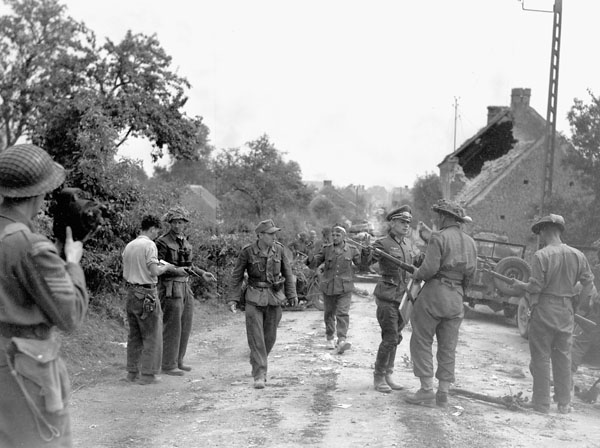
The above photograph was once described as the closest anyone has ever come to photographing a man winning the Victoria Cross. The man winning the medal is Major David Vivian Currie. He is standing on the left of the photo, holding a pistol. This is his story.
The D-day landings did not quite go as planned for the allies. They gained a foothold in France, but they failed to capture all the objectives of the first day. Ten days later they still hadn't captured all the objectives of the first day. Worse, the individual beachheads had not linked up, leaving a gap between the American and British lines.
The Germans sought to capitalize on the gap by driving two armies into it, and striking out one both sides, rolling up the beachheads like a pair of carpets. The allies saw this move by the Germans as an opportunity of their own, and they began to make a pincer movement that would encircle the Germans, and trap their armies.
The German pocket became a slaughter. Allied planes ruled the day and destroyed German tanks and trucks. The Germans were being attacked on both sides, and fought back desperately. The dead were too numerous to bury, and in the summer sun corpses bloated and stank. An RAF pilot who flew over the battlefield at an altitude of hundreds of feet threw up in his cockpit from the stench.
The Germans reversed and sought to retreat through a small gap in the allied pincers near the town of Falaise. A rush was on to close the gap and prevent more Germans from escaping. The fighting became even more bitter. The gap had to be closed fast, but closing a gap was always dangerous. As the two sides of the same force drew nearer the risk of friendly fire was very high. The British and American command decided to have the Canadians close the gap.
Plans were made and orders were issued. Major Currie, serving with the South Alberta Regiment, was given the task of capturing the main German escape route through the town of St Lambert-sur-Dives. On August 18, 1944, Currie set out into the maelstorm with a small force of tanks, anti-tank guns and infantry to close the door on one hundred and fifty thousand Germans and all their equipment.
They ran into trouble almost immediately. Fearsome German 88's quickly knocked out two of Currie's tanks near the village. When night fell, under heavy mortar fire, Currie entered the village on foot to reconnoitre the German defenses and free the survivors in the two disabled tanks. This action alone should have earned him a medal in recognition of his courage. But he was only getting started.
At dawn the next morning Currie personally lead an attack into the village, without the aid of any previous artillery bombardment. In the face of German tanks, infantry and artillery he successfully pushed his way into the town, and secured about half of it. The Germans began launching counter attacks against Currie in an effort to retake the town, and secure once more their escape route. Against all odds, Currie and his men held. Under his unflagging leadership they held.
The casualties in Currie's unit were heavy. Every officer in the unit was killed or wounded. Currie lead alone, and he lead from the front. For the next two days he slept for only one hour.
From his command tank he personally directed fire upon a German Tiger tank- the most feared armour in the German arsenal- and knocked it out. Later, while his tank was taking on long range targets he used a rifle from the turret to deal with snipers who had infiltrated to within fifty yards of his position. The men grew weary and in need of reinforcements. Currie again took charge: the only reinforcements to come to his position came when he personally went, found forty men, and lead them back. These men fled in the face of the next attack. Currie went and rounded them up again. Inspired by his leadership and calmness under fire, they remained with him for the rest of the battle. Once, when an allied artillery bombardment was falling short and landing within fifteen yards of his position, he ordered it to continue because of the devastating effect it was having on the enemy. Throughout the action he moved through his positions, helping the men and giving them words of encouragement.
At nightfall on the 20th the Germans mounted one last attack on Currie's positions. Currie and his men held, and drove the enemy back with losses of seven enemy tanks, twelve 88mm guns and forty vehicles. 300 Germans were killed, 500 were wounded and 2,100 captured. (it was around now that the top photograph was taken.) Currie ordered a counter attack and his men seized the remainder of the village, shutting the door once and for all on the German retreat.
Finally replacements arrived. When Currie saw that the transfer was complete and the situation was secure, the exhaustion of the last three days came over him, and he fell asleep on his feet.
Currie's and the rest of the Canadians' actions during the Falaise Gap exist under a cloud. even back during the war it was felt too much time passed before the gap was closed. Although 50,000 Germans were finally trapped in the pocket, over 100,000 men escaped, men who the allies would have to face again. Recent writers, using Montgomery's journals, point the blame at the Canadians whom Montgomery felt had poor soldiers and poor leadership. Those writers forget that Montgomery would only claim praise for himself. Anything that went right was due to his genius and leadership. Anything which went wrong was someone else's fault. Just one example from this fight. The Canadians did not have many tanks when engaging the German Panzer divisions. Montgomery had committed the British armour to defending his flanks and Canadians like Currie were left using the weapons at hand and improvising in order to achieve the impossible. They deserve our gratitude, not acrimony from dead glory-hounds and armchair quarter backs.
For his actions at St. Lambert-sur-Dives and in closing the Falaise Gap, for his incredible leadership under constant fire, pulling a victory virtually from thin air, Major David Vivian Currie was awarded the Victoria Cross. A more thoroughly earned Cross you will never see.
5 November 2009
A Week of Remembrance: The Blockbuster
In early 1945 the Canadian First Army began a push to drive the Germans out of Holland and back into the Rhineland. Operation Veritable called for the Canadians to drive out of the Nijmegan sector and take the land between the Rhine and Maas rivers. Fighting was now to take place on German soil, and the resistance was expected to be fierce. The Germans prepared for the coming battle blasting dikes and bridges and constructing defensive lines. By late February the advance had slowed down.
A new operation, named Blockbuster, was called for to capture Xanten and the Hochwald.
On February 25th, the first day of Blockbuster, Aubrey Cosens was with the 1st battalion, the Queen's Own Rifles, which was to attack the hamlet of Mooshof and capture ground considered essential for the future operations.
Cosens and his platoon, with two tanks in support, were to attack enemy strong points in three farm buildings. The first two attacks failed, and while the men were regrouping the Germans launched a counterattack. The platoon suffered heavy casualties including the commanding officer was killed. Aubrey was left in charge of just four men and one remaining tank.
Aubrey immediately took control of the situation. He positioned the men to give him covering fire while he ran across open ground, under heavy mortar and machine gun fire, to the remaining tank. He climbed aboard the turret of the tank and from there, despite his exposed position, directed the tank's fire against the enemy positions. From there he helped turn back yet another enemy counter attack.
While still exposed on board the tank, he ordered the tank to ram one of the walls of the farmhouse, with the four men of his platoon in close support. Aubrey leapt through the hole in the wall alone and single handedly killed or took prisoner the German defenders within. Brave though this was, he was just getting warmed up. He pressed the attack on the second of the farm buildings despite heavy mortar, machine gun and small arms fire. He forced an entry into the building, and killed or took prisoners those defenders. And then, just to round out the action, he attacked the third building, alone, and killed or took prisoner its defenders.
Virtually alone he had secured a vital enemy strong point, and because of this the operation could proceed. Operation Blockbuster as a whole was carefully planned, and yet it would have failed but for the wild untamed courage of one man. No amount of planning could have taken Aubrey Cosens' actions into account, yet all their planning would have failed without him.
The echo of the guns from the capture of the farm buildings barely had time to fade when another shot rang out. Aubrey Cosens, who was unstoppable seconds earlier, fell to the ground dead, a sniper's bullet in his head. He was 23.
For the attack on the farm Cosens was posthumously awarded the Victoria Cross. It is on display at the Queen's Own Rifles museum, located at Casa Loma Toronto. It is the only VC I have ever personally seen. I only saw it once, but I felt profound sadness that I saw it one time more than did its owner. At the same time, I saw it as a reminder of how the courage of one person can overcome almost anything, and turn a desperate situation into victory.
A new operation, named Blockbuster, was called for to capture Xanten and the Hochwald.
On February 25th, the first day of Blockbuster, Aubrey Cosens was with the 1st battalion, the Queen's Own Rifles, which was to attack the hamlet of Mooshof and capture ground considered essential for the future operations.
Cosens and his platoon, with two tanks in support, were to attack enemy strong points in three farm buildings. The first two attacks failed, and while the men were regrouping the Germans launched a counterattack. The platoon suffered heavy casualties including the commanding officer was killed. Aubrey was left in charge of just four men and one remaining tank.
Aubrey immediately took control of the situation. He positioned the men to give him covering fire while he ran across open ground, under heavy mortar and machine gun fire, to the remaining tank. He climbed aboard the turret of the tank and from there, despite his exposed position, directed the tank's fire against the enemy positions. From there he helped turn back yet another enemy counter attack.
While still exposed on board the tank, he ordered the tank to ram one of the walls of the farmhouse, with the four men of his platoon in close support. Aubrey leapt through the hole in the wall alone and single handedly killed or took prisoner the German defenders within. Brave though this was, he was just getting warmed up. He pressed the attack on the second of the farm buildings despite heavy mortar, machine gun and small arms fire. He forced an entry into the building, and killed or took prisoners those defenders. And then, just to round out the action, he attacked the third building, alone, and killed or took prisoner its defenders.
Virtually alone he had secured a vital enemy strong point, and because of this the operation could proceed. Operation Blockbuster as a whole was carefully planned, and yet it would have failed but for the wild untamed courage of one man. No amount of planning could have taken Aubrey Cosens' actions into account, yet all their planning would have failed without him.
The echo of the guns from the capture of the farm buildings barely had time to fade when another shot rang out. Aubrey Cosens, who was unstoppable seconds earlier, fell to the ground dead, a sniper's bullet in his head. He was 23.
For the attack on the farm Cosens was posthumously awarded the Victoria Cross. It is on display at the Queen's Own Rifles museum, located at Casa Loma Toronto. It is the only VC I have ever personally seen. I only saw it once, but I felt profound sadness that I saw it one time more than did its owner. At the same time, I saw it as a reminder of how the courage of one person can overcome almost anything, and turn a desperate situation into victory.
6 June 2009
D plus sixty-five years
Today is the sixty-fifth anniversary of the anniversary of D-day. Canadians, British and American soldiers stormed ashore under heavy fire to gain a foothold in France. Their courage and sacrifice helped bring about the end of the Nazi Tyranny, and should never be forgotten.
Most of the popular culture portrayals of D-Day are focused on the American experience, and usually at the disaster of Omaha beach. Saving Private Ryan, for instance, begins with a graphic depiction of the landing at Omaha. I have heard many people say it is the most graphic and realistic portrayal of the battle. In actual fact, the battle was far, far, worse. The movie makes it seem as though the Americans were hung up on the beach for twenty minutes or so, when in actual fact they were pinned down for hours. Through shear guts and determination they waded through the bloody tide and took control of the beach. By the end of the day they were one mile inland.
Less attention is paid to the other American beach, Utah. That was the cakewalk of the entire operation, with the fewest casualties and the farthest advance inland. It was also a mistake. The boat guiding the landing craft in hit a mine and sank. The rest of the craft got caught in a crosswind and strong current, and landed far from their original target, in a spot where the Germans had barely begun to construct their defenses.
The Americans had the extremes of experience on D-Day, both the best and the worst. The British and Canadians forces fell somewhere in between. Of the three British/Canadian Beaches, the most successful was the landing at Juno, the Canadian beach. They pushed far inland and were second only to the landings at Utah.
Yet the landings at D-day failed to achieve the lofty goals of the planners. The troops were to rush inland, link up with paratroopers who had been dropped to secure vital points and throw a defensive perimeter around the city of Caen. The men who sat far from the battlefields and drew lines on a map had set impossible goals for the troops. Caen was not captured on D-Day nor D plus ten nor D plus twenty. It fell over a month after the landings, and then only after it had been obliterated. The month in between had been full of hard fought inches and massacres on both sides. The landings of D-Day were a prelude to slaughter.
The old men who gather today on the beaches and remember lost chums and old friends have lived through horrors none of us, who live under the shadow of safety and peace their sacrifice provided, will ever understand. Their courage and devotion should never, ever be forgotten.
In a related and I suppose lighter note, today is also the anniversary of another British/Canadian/American invasion, though this time it was the Americans invading Canada in the War of 1812. This is the anniversary of the Battle of Stoney Creek, where seven hundred British troops caught 3500 Americans napping (literally) at Stoney Creek and drove them back to Fort George. This was the farthest the Americans advanced during the entire war, and history would be quite different if the seven hundred had failed.
Part of the reason I have not been blogging much lately is because I had been working on a project with a cousin about the war of 1812. We were working on a small history of the War of 1812 in Upper Canada (now Ontario) for a small periodical, which has just ceased publication. I think I'll publish some of what I had written here instead. So, here comes history, one more time.
Most of the popular culture portrayals of D-Day are focused on the American experience, and usually at the disaster of Omaha beach. Saving Private Ryan, for instance, begins with a graphic depiction of the landing at Omaha. I have heard many people say it is the most graphic and realistic portrayal of the battle. In actual fact, the battle was far, far, worse. The movie makes it seem as though the Americans were hung up on the beach for twenty minutes or so, when in actual fact they were pinned down for hours. Through shear guts and determination they waded through the bloody tide and took control of the beach. By the end of the day they were one mile inland.
Less attention is paid to the other American beach, Utah. That was the cakewalk of the entire operation, with the fewest casualties and the farthest advance inland. It was also a mistake. The boat guiding the landing craft in hit a mine and sank. The rest of the craft got caught in a crosswind and strong current, and landed far from their original target, in a spot where the Germans had barely begun to construct their defenses.
The Americans had the extremes of experience on D-Day, both the best and the worst. The British and Canadians forces fell somewhere in between. Of the three British/Canadian Beaches, the most successful was the landing at Juno, the Canadian beach. They pushed far inland and were second only to the landings at Utah.
Yet the landings at D-day failed to achieve the lofty goals of the planners. The troops were to rush inland, link up with paratroopers who had been dropped to secure vital points and throw a defensive perimeter around the city of Caen. The men who sat far from the battlefields and drew lines on a map had set impossible goals for the troops. Caen was not captured on D-Day nor D plus ten nor D plus twenty. It fell over a month after the landings, and then only after it had been obliterated. The month in between had been full of hard fought inches and massacres on both sides. The landings of D-Day were a prelude to slaughter.
The old men who gather today on the beaches and remember lost chums and old friends have lived through horrors none of us, who live under the shadow of safety and peace their sacrifice provided, will ever understand. Their courage and devotion should never, ever be forgotten.
In a related and I suppose lighter note, today is also the anniversary of another British/Canadian/American invasion, though this time it was the Americans invading Canada in the War of 1812. This is the anniversary of the Battle of Stoney Creek, where seven hundred British troops caught 3500 Americans napping (literally) at Stoney Creek and drove them back to Fort George. This was the farthest the Americans advanced during the entire war, and history would be quite different if the seven hundred had failed.
Part of the reason I have not been blogging much lately is because I had been working on a project with a cousin about the war of 1812. We were working on a small history of the War of 1812 in Upper Canada (now Ontario) for a small periodical, which has just ceased publication. I think I'll publish some of what I had written here instead. So, here comes history, one more time.
28 November 2008
And now, a not-so-great moment in Canadian history
Several of my readers said they enjoyed my little tidbits of Canadian history, particularly the military kind. I tend to dwell on some of our more valorous deeds. Today I will tell the story of one of our less noble events. This is the story of the HMCS Uganda.
The Uganda was a light cruiser, with a main armament nine six inch guns. Originally built by the British, she was heavily damaged during actions in the Mediterranean in 1943. While she was undergoing repairs and a refit the Canadian government negotiated with the British for the acquisition of the ship. On October 21, 1944, the Uganda was transferred to the Canadian Navy.
She quickly became the pride of the fleet (at the time Canada had one of the largest navies in the world) she was the largest and most powerful ship in the RCN (unless you count our escort carriers), and served as the flagship for the fleet. She was transferred to the Pacific theatre of operations where she received battle honours for Okinawa, and partook in operations at Formosa and Sakishima Gunto. Her conduct was honourable and noteworthy, and she was considered to be a valuable asset to the British Pacific Fleet and the US Third Fleet, both of which she was attached to at various times during her tour of duty in the Pacific.
So far, so good. What happened, then, that she is in the less-than-heroic category? In a word, politics.
The Wartime Government run William Lyon Mackenzie King (one of the biggest nutjobs to ever run a country or political entity- and remember the list of nutjobs to run a geographical area includes Nero, Caligula,etc) had just run an election which turned on the conscription crisis and the Zombie crisis. If he supported conscription he was in danger of losing Quebec, a major power base for him. Under the ambiguous slogan of "Conscription if necessary but not necessarily conscription" the Liberals had squeaked out a narrow victory. Eventually King was forced to send some of the Zombies (men who had signed up or been conscripted into the army but refused to volunteer for overseas duty) to Europe. Because of this, tensions were increasing in Quebec, where (lead by the clergy, I am sorry to say) conscription was extremely unpopular. To keep Quebec at least somewhat mollified, King promised that the war against Japan, when the invasion occurred, would be fought totally and entirely by volunteers.
Back to the Uganda. As a result of the politics, the Uganda received a strange transmission from the RCN headquarters in early May, 1945. The captain was ordered to take a poll of his crew and see how many wished to volunteer to fight Japan. I stress, this occurred while they were actually fighting Japanese forces. The poll took place on May 7, and the result was 605 of the 907 member crew voted not to volunteer to fight Japan. As a result, the ship detached itself from the American Third Fleet and sailed for home, arriving in BC on August 10th, the date of the Japanese surrender.
The ship was mothballed 1947, but recommissioned in 1952 for the Korean War. As it was recommissioned the Uganda was rechristened the HMCS Quebec, a rather fitting name, considering its history. It served two tours in Korea. In 1956 the ship was taken out of service and in 1961 it was sold for scrap- to Japan.
To this day, the Uganda remains the only known warship in history to democratically vote itself out of a war.
The Uganda was a light cruiser, with a main armament nine six inch guns. Originally built by the British, she was heavily damaged during actions in the Mediterranean in 1943. While she was undergoing repairs and a refit the Canadian government negotiated with the British for the acquisition of the ship. On October 21, 1944, the Uganda was transferred to the Canadian Navy.
She quickly became the pride of the fleet (at the time Canada had one of the largest navies in the world) she was the largest and most powerful ship in the RCN (unless you count our escort carriers), and served as the flagship for the fleet. She was transferred to the Pacific theatre of operations where she received battle honours for Okinawa, and partook in operations at Formosa and Sakishima Gunto. Her conduct was honourable and noteworthy, and she was considered to be a valuable asset to the British Pacific Fleet and the US Third Fleet, both of which she was attached to at various times during her tour of duty in the Pacific.
So far, so good. What happened, then, that she is in the less-than-heroic category? In a word, politics.
The Wartime Government run William Lyon Mackenzie King (one of the biggest nutjobs to ever run a country or political entity- and remember the list of nutjobs to run a geographical area includes Nero, Caligula,etc) had just run an election which turned on the conscription crisis and the Zombie crisis. If he supported conscription he was in danger of losing Quebec, a major power base for him. Under the ambiguous slogan of "Conscription if necessary but not necessarily conscription" the Liberals had squeaked out a narrow victory. Eventually King was forced to send some of the Zombies (men who had signed up or been conscripted into the army but refused to volunteer for overseas duty) to Europe. Because of this, tensions were increasing in Quebec, where (lead by the clergy, I am sorry to say) conscription was extremely unpopular. To keep Quebec at least somewhat mollified, King promised that the war against Japan, when the invasion occurred, would be fought totally and entirely by volunteers.
Back to the Uganda. As a result of the politics, the Uganda received a strange transmission from the RCN headquarters in early May, 1945. The captain was ordered to take a poll of his crew and see how many wished to volunteer to fight Japan. I stress, this occurred while they were actually fighting Japanese forces. The poll took place on May 7, and the result was 605 of the 907 member crew voted not to volunteer to fight Japan. As a result, the ship detached itself from the American Third Fleet and sailed for home, arriving in BC on August 10th, the date of the Japanese surrender.
The ship was mothballed 1947, but recommissioned in 1952 for the Korean War. As it was recommissioned the Uganda was rechristened the HMCS Quebec, a rather fitting name, considering its history. It served two tours in Korea. In 1956 the ship was taken out of service and in 1961 it was sold for scrap- to Japan.
To this day, the Uganda remains the only known warship in history to democratically vote itself out of a war.
3 August 2008
Another anniversary
This weekend is the twelfth anniversary of my father's death. He died on the 5th, a Monday, but it was the Monday of the August long weekend. We were summoned to the hospital Sunday morning, right after Mass, and the family spent a long day and a long night, waiting for the inevitable. They snowed him with morphine, but he was aware of us. Cantankerous to the end, his final words were: "Shut up!"
I like remember Dad, and I've been recording his stories for my children. I thought I'd pull out one from my little collection of tales in honour of the old guy:
I like remember Dad, and I've been recording his stories for my children. I thought I'd pull out one from my little collection of tales in honour of the old guy:
I said Dad almost got kicked out of the army during his initial training. The reason why he was almost kicked out is because he almost didn’t pass the physical. The reason he almost didn’t pass the physical was the same reason he almost died when he was seven.
One fine morning in the sunshine of his childhood my dad stepped out the front door of his home and off the front porch. He skipped down the path in front of his home, stopped at the side of the Dundurn street to check and see if any cars were coming at that precise moment. He then stepped out onto the road with the intention of crossing to the other side to get to store there, and was promptly run over by a car.
His parents rushed him to a doctor who examined Dad, put some stitches and a bandage on Dad's head (most likely without any aid from anaesthetics), before he gave his professional opinion. “I don’t know how he’s still alive,” said the doctor.
“What do you mean?” asked my grandmother. Dad didn’t look too bad to her eyes.
“Well,” said the doctor. “I think he can see a bus, or a streetcar, but there’s no way he can see a car.”
Grandma and Grandpa had Dad’s eyesight tested immediately. His vision was found to be gravely deficient and he was fitted with glasses. The short term effect was a very rapid improvement in his grades, as he could now see the blackboard. In fact, he turned out to be a gifted student, and was twice bumped up a grade. He also saw the part of the Niagara escarpment that ran through Hamilton, which is referred to locally as “The Mountain”, for the first time. Prior to that he wondered what people were talking about when they spoke of a “mountain”.
He wore glasses and carried a dent over his left temple from where the car hit him for the rest of his life.
After Dad signed up, the first part of his training brought him, as it did thousands of other recruits, at the horse stables on the Exhibition Grounds in Toronto. There, he later said, all the recruits caught a cough that lasted about three years. During the war, he said, you’d hear that cough, and know that someone nearby had come through the same place as yourself.Everyone had a physical exam, and part of the physical was an eye examination. Although he wore glasses, Dad’s eyesight was still poor and he realized there was no honest way he’d pass the eye exam. So the night before his eyes were to be tested, he made friends with the recruit who was the office assistant for the eye doctor. Dad took the assistant out and bought him drinks the night through. In return, at Dad’s suggestion, the assistant happily handed over copies of all the eye charts, which Dad memorized for the next day.
At his exam the eye doctor was dumbfounded at Dad’s absolutely perfect vision. “There’s no way you can see those lines!” he said to Dad.
“There’s no way you can prove it,” Dad shot back.Resigned, busy, and perhaps under pressure to approve as many men as possible, the doctor relented and did not push the issue. Dad was approved, and ready for war.
6 June 2008
Anniversary of Invasions
Today will be well and justly remembered as the 64th anniversary of D-day, when British, American and Canadian troops stormed the beaches of Normandy. Not a day goes by when I do not thank God for men such as these, and I extend such thanks to any veterans and their families.
Today is also the 195th anniversary of the day when British and Canadian Troops thwarted an American invasion of Canada. If you are a Canadian and have not heard of the Battle of Stoney Creek, it is past time you learned it. Click here, and start visiting a few of the sites. Or better yet, visit the library.
The site of the Stoney Creek Battle will be having a pair of reenactments over the weekend, both during the day which is odd as the battle took place at night. As a side note, I wonder how the re-enactors arrange such things as these re-enactments use both Canadian and American actors. I have an image of a conversation containing lines such as: "Fine. We'll take the fall and run away at Stoney Creek, but then we get to kick your butts at Fort George."
Today is also the 195th anniversary of the day when British and Canadian Troops thwarted an American invasion of Canada. If you are a Canadian and have not heard of the Battle of Stoney Creek, it is past time you learned it. Click here, and start visiting a few of the sites. Or better yet, visit the library.
The site of the Stoney Creek Battle will be having a pair of reenactments over the weekend, both during the day which is odd as the battle took place at night. As a side note, I wonder how the re-enactors arrange such things as these re-enactments use both Canadian and American actors. I have an image of a conversation containing lines such as: "Fine. We'll take the fall and run away at Stoney Creek, but then we get to kick your butts at Fort George."
4 June 2008
A forgotten day
On June 4, 1944, Rome fell to the allies. American units lead by the joint Canadian American First Special Service Force (better known as the Devil's Brigade) were the first into the city. The event was soon forgotten, overshadowed by the D-Day landings just two days later. Though the Italian campaign was the bloodiest and most costly of the Western Front, it soon became an object of ridicule and one member of the British Parliament called the men serving there "D-Day Dodgers". The men themselves, at least the Canadians, called themselves "The Spaghetti League."
For the remainder of the war the allied troops in Italy were subject to shortages of supplies, outdated equipment, and replacement troops. Guns were often rationed to firing only three shells a day. The very terrain itself was against the Allies, and the interior of Italy favoured defense over attack. Italy became a sideshow to the main event in Normandy, and all efforts were concentrated there.
The day after tomorrow there shall be news broadcasts and old and new specials about the liberation of Europe. D-Day was a tremendous event, but Europe had already been invaded back in '43. I do not begrudge the vets who stormed ashore at Juno, Gold, Sword, Utah and Omaha the repute or glory they have won, no, not one comma of it. I am saying that we would do well from to remember from time to time the boys of the Spaghetti League.
For the remainder of the war the allied troops in Italy were subject to shortages of supplies, outdated equipment, and replacement troops. Guns were often rationed to firing only three shells a day. The very terrain itself was against the Allies, and the interior of Italy favoured defense over attack. Italy became a sideshow to the main event in Normandy, and all efforts were concentrated there.
The day after tomorrow there shall be news broadcasts and old and new specials about the liberation of Europe. D-Day was a tremendous event, but Europe had already been invaded back in '43. I do not begrudge the vets who stormed ashore at Juno, Gold, Sword, Utah and Omaha the repute or glory they have won, no, not one comma of it. I am saying that we would do well from to remember from time to time the boys of the Spaghetti League.
10 November 2007
Voices From The Past
I stand in a line of military men. My father served in the Second World War. His father served in the First. His father was in the military at the time of the Boer War and the First. He lied about his age to sign up for in 1916- he said he was forty four, but then gave his correct birth date on his enlistment papers. He was caught, and sent to guard the Welland Canal against fifth column activity. Tomorrow is Remembrance Day, and I thought I would speak little of them.
My father spoke of his war lightly- tales of scrounging for booze, getting into trouble, getting out of trouble- anecdotes for the most part. I have told a few of them, like the time a priest said Mass at the Front, or the time he wandered into a chicken coop while on patrol. He had other stories which gave a different picture of his time in the war. Friends dying horribly, being bombed by his allies, walking into traps, cracking the Hitler Line, the Gothic Line, the Scheldt Campaign- he could speak of such things, but he preferred not to, unless something amusing happened at the time.
For instance, he once spoke of an attack on an airfield somewhere in Italy. Dad was a truck driver attached to the Cape Breton Highlanders at the time. (Truck drivers did take part in battle, especially near the end of the war when many were converted to combat troops.) The drivers were sent early in the day to pick up 19 new trucks just delivered- the paint wasn't even scratched yet. The drivers got their trucks, picked up their troops and drove to their objective, and right into a trap. The Germans had arrived before the Canadians and held the high ground beyond the airfield. They waited until the entire line was in view, and they opened up.
The Canadians were trapped in what Dad called the worst fire fight he saw of the war- with the exception of one in the Netherlands/Belgium he refused to speak about. The Germans had ranged their guns while they waited for the Canadians, and now they had the whole field covered. They shot at any target. They used the trucks for target practice, basically. The Canadians dove for cover in shell holes, ditches, a latrine, anything- while the field around them burst with fire and smoke. The Officers sent out a call to HQ, calling for artillery support. The call came back: there would be no support, now get on with it. The Sergeants and the Lieutenants drew their pistols and pointed them at their own men. The message was clear: get up and fight, and you may die; stay here, and you will die. The men rose from their little holes, swallowed their fear, moved forward and did the impossible. Within a few hours the airfield was in their hands. But this being Dad's story, it had to have a punchline, and here it is: Of those nineteen new trucks, only two were left.
I didn't join up, because my father talked me out of it. I asked him once, while he was reading the newspaper, if he thought I should join. At the time I was debating between university, the military, or the priesthood. He lowered his paper, and looked at me with a haunted, penetrating, unreadable gaze. "It's not what you think," he said at last, and he raised the newspaper again.
My Grandfather, on the other hand, never spoke of his war to his sons at all. He was a decorated hero, and his death was carried on the front page (lower left hand corner) of one of the Hamilton newspapers. He never told his sons why he got it, and only said: "They handed it out with the rations." We later found out he captured some prisoners, including an officer, possibly at Amiens. He may have got it for that.
He signed up in 1916, at 29 years of age, married about a year with a son a few months old. He was a short man, and he only qualified to be a soldier because the government had lowered the height requirements of men volunteering for duty. His records place his height at 5 foot 1, but my father said that was only if he stood on his toes. His first major battle, as near as we can tell, was Vimy.
I am fortunate to have in my possession three of his letters, in which he barely mentions the war. The three letters also coincide with three titanic battles of the war: Passchendaele, Amiens, and Drocourt-Quaent. I will reprint here the one from Passchendaele. But let me say a few words of the battle. (I suggest you click on the link)
There was a horror associated with that battle found nowhere else in the war. It was supposed to be a breakthrough battle, but the breakthrough never happened. British heavy shelling had failed to destroy the German defenses, and in fact, its main effect was the destruction of the irrigation and drainage system of the battlefield, just in time for the wettest summer and autumn on record. The whole battle field became a swamp, and man sank into the mud and drowned. When one of the British High Command, General Kiggle, came forward to inspect the battlefield, he said to his driver, "Good God, did we order men to fight in that?" to which the driver laconically replied: "It's worse farther up, sir." The general broke down and cried.
The British, and then the Australians, made some headway, but by the end of September they had not yet achieved the objectives of the first day of battle- the town of Passchendaele. British Commander Field Marshall Haig knew he would be sacked if he didn't at least capture the town, and he called upon the Canadian Corps to take the objective. The Canadian General, Sir Arthur Currie, argued with Haig. "It'll take fifteen thousand casualties," he said. "And it's not worth one drop of blood!" Haig repeated his order, and Currie was left with no choice. The Canadians took the town 90 years ago today- November 10, 1917. Haig's job was safe. Currie was almost exactly right in his prediction of 15,000 casualties.
During this battle my Grandfather took a pencil and wrote a letter home to his father. Mice have chewed on it, and a few words are lost, but it goes like this:
Another veteran of the battle, William Bird, wrote of the aftermath of Passchendaele:
From such men I come. To such men I owe my home, my freedom, my life, my everything, and as long as my breath holds I shall tell people of these men, and I shall hand what I know on to my children, and their children, that such men may not be forgotten but be revered forever by a grateful people.
My father spoke of his war lightly- tales of scrounging for booze, getting into trouble, getting out of trouble- anecdotes for the most part. I have told a few of them, like the time a priest said Mass at the Front, or the time he wandered into a chicken coop while on patrol. He had other stories which gave a different picture of his time in the war. Friends dying horribly, being bombed by his allies, walking into traps, cracking the Hitler Line, the Gothic Line, the Scheldt Campaign- he could speak of such things, but he preferred not to, unless something amusing happened at the time.
For instance, he once spoke of an attack on an airfield somewhere in Italy. Dad was a truck driver attached to the Cape Breton Highlanders at the time. (Truck drivers did take part in battle, especially near the end of the war when many were converted to combat troops.) The drivers were sent early in the day to pick up 19 new trucks just delivered- the paint wasn't even scratched yet. The drivers got their trucks, picked up their troops and drove to their objective, and right into a trap. The Germans had arrived before the Canadians and held the high ground beyond the airfield. They waited until the entire line was in view, and they opened up.
The Canadians were trapped in what Dad called the worst fire fight he saw of the war- with the exception of one in the Netherlands/Belgium he refused to speak about. The Germans had ranged their guns while they waited for the Canadians, and now they had the whole field covered. They shot at any target. They used the trucks for target practice, basically. The Canadians dove for cover in shell holes, ditches, a latrine, anything- while the field around them burst with fire and smoke. The Officers sent out a call to HQ, calling for artillery support. The call came back: there would be no support, now get on with it. The Sergeants and the Lieutenants drew their pistols and pointed them at their own men. The message was clear: get up and fight, and you may die; stay here, and you will die. The men rose from their little holes, swallowed their fear, moved forward and did the impossible. Within a few hours the airfield was in their hands. But this being Dad's story, it had to have a punchline, and here it is: Of those nineteen new trucks, only two were left.
I didn't join up, because my father talked me out of it. I asked him once, while he was reading the newspaper, if he thought I should join. At the time I was debating between university, the military, or the priesthood. He lowered his paper, and looked at me with a haunted, penetrating, unreadable gaze. "It's not what you think," he said at last, and he raised the newspaper again.
My Grandfather, on the other hand, never spoke of his war to his sons at all. He was a decorated hero, and his death was carried on the front page (lower left hand corner) of one of the Hamilton newspapers. He never told his sons why he got it, and only said: "They handed it out with the rations." We later found out he captured some prisoners, including an officer, possibly at Amiens. He may have got it for that.
He signed up in 1916, at 29 years of age, married about a year with a son a few months old. He was a short man, and he only qualified to be a soldier because the government had lowered the height requirements of men volunteering for duty. His records place his height at 5 foot 1, but my father said that was only if he stood on his toes. His first major battle, as near as we can tell, was Vimy.
I am fortunate to have in my possession three of his letters, in which he barely mentions the war. The three letters also coincide with three titanic battles of the war: Passchendaele, Amiens, and Drocourt-Quaent. I will reprint here the one from Passchendaele. But let me say a few words of the battle. (I suggest you click on the link)
There was a horror associated with that battle found nowhere else in the war. It was supposed to be a breakthrough battle, but the breakthrough never happened. British heavy shelling had failed to destroy the German defenses, and in fact, its main effect was the destruction of the irrigation and drainage system of the battlefield, just in time for the wettest summer and autumn on record. The whole battle field became a swamp, and man sank into the mud and drowned. When one of the British High Command, General Kiggle, came forward to inspect the battlefield, he said to his driver, "Good God, did we order men to fight in that?" to which the driver laconically replied: "It's worse farther up, sir." The general broke down and cried.
The British, and then the Australians, made some headway, but by the end of September they had not yet achieved the objectives of the first day of battle- the town of Passchendaele. British Commander Field Marshall Haig knew he would be sacked if he didn't at least capture the town, and he called upon the Canadian Corps to take the objective. The Canadian General, Sir Arthur Currie, argued with Haig. "It'll take fifteen thousand casualties," he said. "And it's not worth one drop of blood!" Haig repeated his order, and Currie was left with no choice. The Canadians took the town 90 years ago today- November 10, 1917. Haig's job was safe. Currie was almost exactly right in his prediction of 15,000 casualties.
During this battle my Grandfather took a pencil and wrote a letter home to his father. Mice have chewed on it, and a few words are lost, but it goes like this:
Somewhere in Belgium
Sat, Oct. 27/17
Dear Dad,
Just a line or to(sic) to let you know know I received your welcome letter of Sept 19th....sure was glad to hear that you are keeping well... as this leaves me that...way at present but like yourself I don't like the idea of another winter in this place knowing their(sic) is a pretty good chance of it being over by Xmas and heres hoping it comes true. Your ever welcome gift of smokes came in mighty handy Dad in fact I was beginning to look for your letter to come as I was out that time. I think I got those other letters of yours all right..... glad to hear that...were up on pass again .... hope you get lots of them... this is sure some place for mud & rain it is the limit. Well Dad I will close now as we are busy around here so will write again first chance I get with love to all.
Your loving son, Fred.
Another veteran of the battle, William Bird, wrote of the aftermath of Passchendaele:
Captain Arthur was kind to us. He stood and gazed at our pitiful ranks, gazed without speaking, and I saw in his eyes things of which no man speaks- the things words would kill. We had little drill, but rested and slept and had good food until finally we were more like human beings. But every man who had endured Passchendaele would never be the same again, was more or less a stranger to himself.
From such men I come. To such men I owe my home, my freedom, my life, my everything, and as long as my breath holds I shall tell people of these men, and I shall hand what I know on to my children, and their children, that such men may not be forgotten but be revered forever by a grateful people.
4 July 2007
Once there was a time...
I told this story at dinner the other night. The family liked it, and Puff told me I should write it out on the blog. Like most of my best stories, it isn't my story at all, but my father's, and like many of his best stories, it's from the war.
Dad was at or near the front lines in Italy one day when an officer came down the line. "Any Catholics here," he began. "There's a priest about to say Mass in the next field." Dad took his helmet and rifle and headed over to the next field, as did several other Catholics.
He was appalled when he arrived. The field was wide open, easily visible from the Germans, and exposed to any kind of enemy fire. The men immediately looked for a hill, a shell hole, a rock, a furrow- anything that might give them any sort of cover. Meanwhile, in the middle of the field stood the priest, carefully setting up his Mass kit on a big rock, taking his time and doing it properly, appearing as if he had no concern in the world other than this, and going about it as if he were in a parish back home, and there was no war to trouble anyone or anything.
If there was ever a time for a Tridentine speed Mass, this could have been it. But, to Dad's horror, (and he knew, because he used to be an altar boy at a Cathedral) the priest said the Mass slowly and carefully, doing every movement as prescribed, omitting no prayer, while gunfire raged around them.
At last the priest turned, holding the consecrated host. "Come to Communion!" he shouted out to the men hiding in the field. "I grant you all full absolution. Come!"
Dad's reaction was: "He's got to be kidding." But then he saw it: the soldiers making their way forward to receive communion. Granted, they approached the priest at a dead run, and left at a dead run as soon as it was received. But still they came. Dad, emboldened by the other men, came forward himself, received, thanked God, and raced away.
He stayed in his furrow watching as the priest put away his Mass kit as properly as he set it out, and, when finished and having said his final prayers, the priest snapped his case shut and walked away.
That's the story. Not the best punch line, but the family liked it. I like it for it reminds of a good man I once knew and shall never see again in the flesh. It reminds me that there were other good men like him, once upon a time. Men who believed there were things to stand for, things to fight for, things that were worth risking your life for. And on that list of things worth risking your life over was Mass, and the chance for Communion.
Dad was at or near the front lines in Italy one day when an officer came down the line. "Any Catholics here," he began. "There's a priest about to say Mass in the next field." Dad took his helmet and rifle and headed over to the next field, as did several other Catholics.
He was appalled when he arrived. The field was wide open, easily visible from the Germans, and exposed to any kind of enemy fire. The men immediately looked for a hill, a shell hole, a rock, a furrow- anything that might give them any sort of cover. Meanwhile, in the middle of the field stood the priest, carefully setting up his Mass kit on a big rock, taking his time and doing it properly, appearing as if he had no concern in the world other than this, and going about it as if he were in a parish back home, and there was no war to trouble anyone or anything.
If there was ever a time for a Tridentine speed Mass, this could have been it. But, to Dad's horror, (and he knew, because he used to be an altar boy at a Cathedral) the priest said the Mass slowly and carefully, doing every movement as prescribed, omitting no prayer, while gunfire raged around them.
At last the priest turned, holding the consecrated host. "Come to Communion!" he shouted out to the men hiding in the field. "I grant you all full absolution. Come!"
Dad's reaction was: "He's got to be kidding." But then he saw it: the soldiers making their way forward to receive communion. Granted, they approached the priest at a dead run, and left at a dead run as soon as it was received. But still they came. Dad, emboldened by the other men, came forward himself, received, thanked God, and raced away.
He stayed in his furrow watching as the priest put away his Mass kit as properly as he set it out, and, when finished and having said his final prayers, the priest snapped his case shut and walked away.
That's the story. Not the best punch line, but the family liked it. I like it for it reminds of a good man I once knew and shall never see again in the flesh. It reminds me that there were other good men like him, once upon a time. Men who believed there were things to stand for, things to fight for, things that were worth risking your life for. And on that list of things worth risking your life over was Mass, and the chance for Communion.
Subscribe to:
Posts (Atom)